
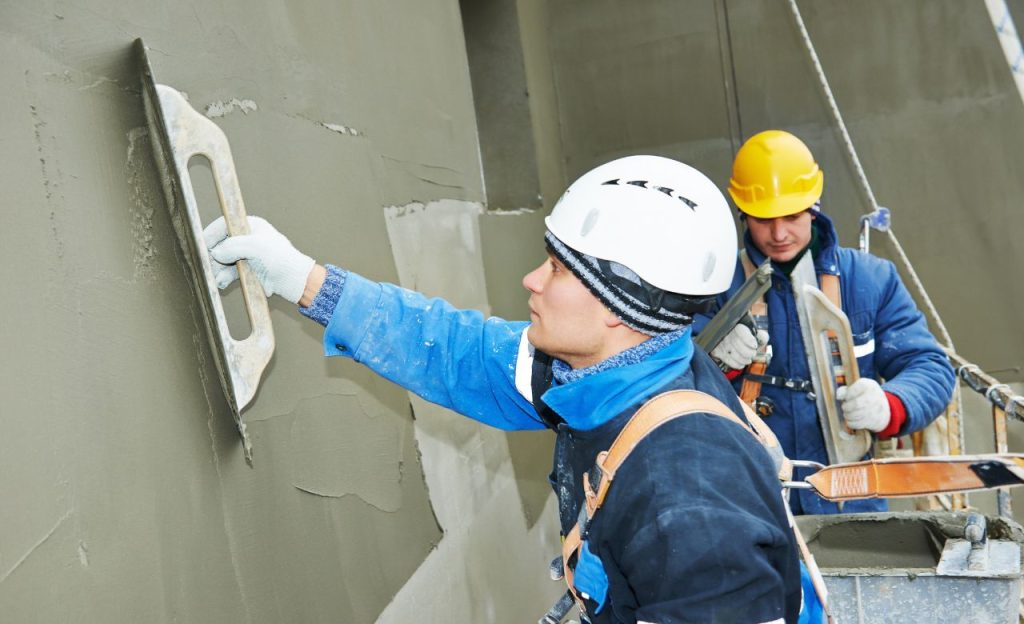
A hands-on trade qualification in solid plastering for residential and commercial work. Learn to apply plaster, cement and render to create smooth or decorative finishes, combining classroom training with practical workshop sessions at our Seven Hills facility.
Full fee breakdown, intake dates and entry requirements, straight to your inbox.
Entry requirements, timelines and paperwork differ depending on where you are applying from. Pick the closest match and we will send you the right information.
You will need a Confirmation of Enrolment before you can apply for a student visa. We walk you through the sequence.
Transferring providers or moving into a trade qualification. Release and transfer rules apply, so talk to us first.
Placing students in trade qualifications. Request the agent pack with fees, intakes and commission terms.
We publish the full fee up front rather than asking you to call and find out. Approved course credit may reduce both your fees and your course duration.
Fees are for the full 52-week qualification. Approved course credit or recognition of prior learning may reduce both the fee and the duration. You will receive written notice of any change, and a new CoE if credit is approved after your original CoE has been issued.
By the end of the CPC31020, you will have the trade skills to work as a qualified solid plasterer across residential and commercial projects.
Work safely to WHS requirements, policies and procedures on construction sites.
Read and interpret plans and specifications for plastering work.
Handle solid plastering materials and use the right tools and equipment.
Prepare surfaces correctly ahead of plastering application.
Apply float and render finishes to straight and curved surfaces.
Apply set coats and trowelled texture finishes, and restore existing plasterwork.
This qualification provides a genuine trade outcome in solid plastering for residential and commercial work, covering common construction industry skills alongside specialist plastering techniques. It is suitable for an Australian apprenticeship pathway and can lead into higher-level building and construction qualifications.
To achieve this qualification you must demonstrate competency in 15 core units and 5 elective units. You must complete 20 units in total: 15 core units covering construction fundamentals and specialist plastering skills, plus 5 elective units covering heights, elevated work platforms and related trade systems.
Prerequisites: an asterisk (*) against a unit code indicates a prerequisite requirement. Prerequisite units must be assessed before assessment of any unit marked with an asterisk. All prerequisite requirements are packaged within the qualification.
| Core Units | Description |
|---|---|
| CPCCWHS2001 | Apply WHS requirements, policies and procedures in the construction industry |
| CPCCOM1012 | Work effectively and sustainably in the construction industry |
| CPCCOM1013 | Plan and organise work |
| CPCCOM1014 | Conduct workplace communication |
| CPCCOM1015 | Carry out measurements and calculations |
| CPCCCM2006 | Apply basic levelling procedures |
| CPCCOM2001* | Read and interpret plans and specifications |
| CPCCCM2008* | Erect and dismantle restricted height scaffolding |
| CPCCSP2001* | Handle solid plastering materials |
| CPCCSP2002* | Use solid plastering tools and equipment |
| CPCCSP2003* | Prepare surfaces for plastering |
| CPCCSP3001* | Apply float and render to straight and curved surfaces |
| CPCCSP3002* | Apply set coats |
| CPCCSP3003* | Apply trowelled texture coat finishes |
| CPCCSP3004* | Restore and renovate solid plasterwork |
| Elective Units | Description |
| CPCWHS1001 | Prepare to work safely in the construction industry |
| CPCCCM2012* | Work safely at heights |
| CPCCCM3001 | Operate elevated work platforms to 11 metres |
| CPCCPB3026* | Erect and maintain trestle and plank systems |
| CPCCPB3015* | Install acoustic and thermal environmental protection systems |
Pacific College Sydney provides industry-relevant training and modern facilities so students develop practical skills that match current workplace expectations.
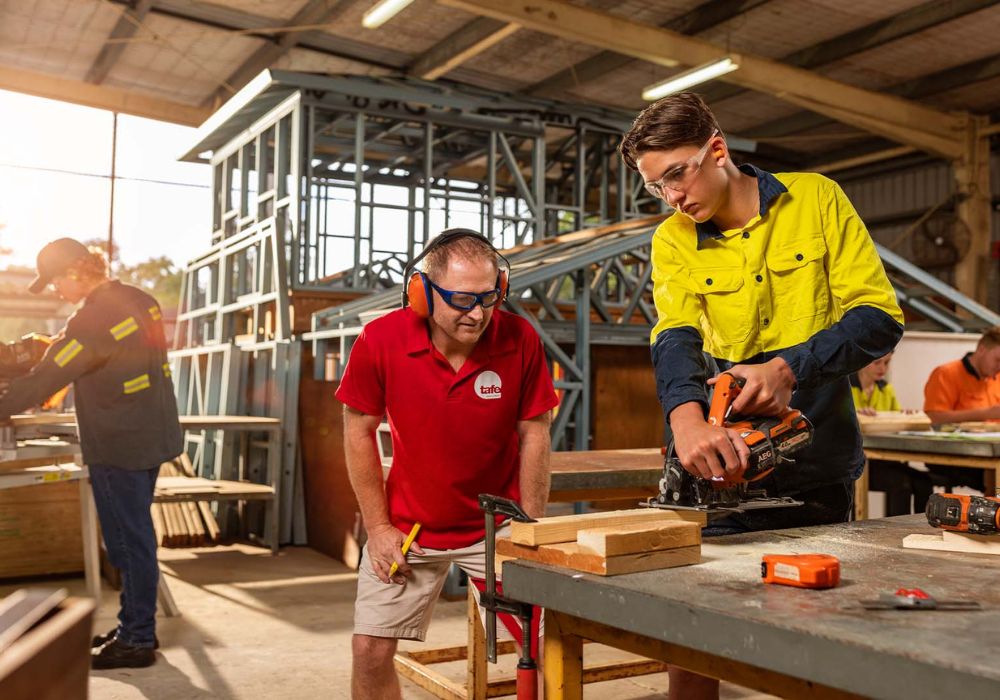
Classes and practical workshop sessions run at our Parramatta campus in the heart of Sydney’s second CBD, a short walk from Parramatta station and the light rail.
Applicants also complete a pre-enrolment review so we can identify any additional support you may need to finish the course successfully.
Most applicants who think they fall short actually have a pathway: through the LLN test, an EAP course, or prior study in Australia. Send us your details and we will tell you exactly where you stand and what is missing.
Earning your CPC31020 Certificate III in Solid Plastering opens up professional pathways within the Australian construction industry.
Execute skilled plastering work across diverse building projects.
Focus on applying high-quality cement and decorative plaster finishes to exterior surfaces.
Establish and manage your own plastering business.
Restore and renovate existing solid plasterwork on heritage and older buildings.
Coordinate plastering crews and quality on larger residential or commercial sites.
Graduates are well-positioned to progress toward CPC40120 Certificate IV and CPC50220 Diploma qualifications for further career growth.
Licensing and registration requirements differ between states and territories where relevant. Check with the relevant regulatory authority in the state where you intend to work.
Assessments are based on real workplace situations that meet industry standards, carried out in a simulated work environment to assess hands-on competency, collaboration and time management.
Methods include project work, presentations, reports, portfolios, case studies and short-answer questions. Assessment tasks:
Students are provided with clear instructions, templates and resources for each assessment task, an assessment plan for tracking due dates, and a cover sheet to be submitted with each task. Supporting documents, policies and procedures are set out in the student and assessor guides.
Students who do not meet competency requirements on an assessment have the opportunity to reassess, with the process and criteria provided in advance. Students may appeal assessment outcomes if they believe an assessment was not conducted fairly, under the college’s formal review process aligned with regulatory standards.
You can apply for course credit using past skills and experience, through credit transfer or recognition of prior learning. For international students, approved credit may reduce both your fees and your course duration, with written notice of the outcome and a new CoE if approved after your original CoE was issued.
Award issued: students who successfully complete this nationally recognised training are awarded the Certificate III in Solid Plastering. Students who complete some but not all units receive a Statement of Attainment for the units achieved.
 Posted on Google
 Sayeed Parvez
Trustindex verifies that the original source of the review is Google.
Posted on Google Daljeet SinghExcellence service with great sager paudel sirPosted on Google
 Fong Kwok
Send your details. An admissions adviser confirms your eligibility, the fee that applies to you, and the next intake date.
Provide your Year 12 evidence, English results and White Card. If you do not meet the English requirement, complete the LLN test.
Receive a written offer with the full fee schedule. Accept, pay the deposit, and your CoE is issued for your visa application.
Complete enrolment, attend orientation at Parramatta, and start on your intake date.
The course runs for 52 weeks in total: 44 weeks of training and assessment, plus 8 weeks of scheduled term breaks. Weekly study is 15 hours face-to-face and practical training plus 5 hours online.
The estimated total cost is AU$22,500, made up of a $20,000 tuition fee and $2,500 in non-tuition fees. Contact us to find out about payment options.
Classroom training is delivered at our Parramatta campus, while practical workshop-based training takes place at our dedicated facility in Seven Hills, NSW.
Yes. Pacific College Sydney is a CRICOS-registered institution (Code: 04146E), fully authorised to deliver this course to international students in Australia.
You must be at least 18 years old, have completed Year 12 or equivalent, participate in a pre-enrolment interview and pre-training review, and provide IELTS 6.0 or equivalent English evidence.
Yes. You must be physically capable of standing for extended periods, lifting and carrying construction materials, using hand and power tools, working at heights, and performing practical tasks in workshop environments.
You must wear Personal Protective Equipment during practical training, including safety boots, high-visibility clothing, safety glasses, gloves, a hard hat and hearing protection.
The course covers 20 units in total: 15 core units and 5 elective units, covering construction fundamentals, specialist solid plastering skills, and related trade systems such as working at heights.
Yes. Pacific College Sydney offers credit transfer for formally completed units from another RTO, and Recognition of Prior Learning (RPL) for skills gained through work experience. Contact us before enrolling to find out if you qualify.
Graduates can pursue roles as a Residential and Commercial Solid Plasterer, Specialist Renderer, or Independent Contractor, and may progress into CPC40120 Certificate IV in Building and Construction or CPC50220 Diploma of Building and Construction.
Send us your details and we will confirm your eligibility, the fee that applies to you, and the next available intake at Parramatta.