
A trade qualification for the glass and glazing industry, covering the manufacture, processing, installation and repair of glass products for residential, commercial and industrial applications. Combine classroom training with practical workshop sessions at our Seven Hills facility.
Full fee breakdown, intake dates and entry requirements, straight to your inbox.
Entry requirements, timelines and paperwork differ depending on where you are applying from. Pick the closest match and we will send you the right information.
You will need a Confirmation of Enrolment before you can apply for a student visa. We walk you through the sequence.
Transferring providers or moving into a trade qualification. Release and transfer rules apply, so talk to us first.
Placing students in trade qualifications. Request the agent pack with fees, intakes and commission terms.
For the latest information on course fees and payment options, please contact our Admissions Team at admissions@pacific.edu.au.
Our team will be happy to assist you with current tuition fees, additional charges, available payment options, and upcoming course intakes.
| Year | Term | First Intake | Mid Intake | Break/Holiday Intake* |
|---|---|---|---|---|
| 2026 | Term 3 | 6 Jul 2026 | 10 Aug 2026 | 14 Sep 2026 |
| Term 4 | 6 Oct 2026 (Tue) | 9 Nov 2026 | 14 Dec 2026 | |
| 2027 | Term 1 | 4 Jan 2027 | 8 Feb 2027 | 15 March 2027 |
| Term 2 | 5 Apr 2027 | 10 May 2027 | 14 June 2027 | |
| Term 3 | 5 Jul 2027 | 9 Aug 2027 | 13 September 2027 | |
| Term 4 | 5 Oct 2027 (Tue) | 8 Nov 2027 | 13 December 2027 | |
| 2028 | Term 1 | 3 Jan 2028 | 7 Feb 2028 | 13 March 2028 |
| Term 2 | 3 Apr 2028 | 8 May 2028 | 12 June 2028 | |
| Term 3 | 3 Jul 2028 | 7 Aug 2028 | 11 September 2028 | |
| Term 4 | 3 Oct 2028 (Tue) | 6 Nov 2028 | 11 December 2028 |
Note: The Term 4 intake dates for 2026, 2027, and 2028 have been adjusted to commence on the first business day following the NSW Labour Day public holiday, which falls on the first Monday of October each year.
Accordingly:
All enrolment periods will continue for two weeks from the respective intake commencement dates.
By the end of the MSF30422, you will have the trade skills to work in the glass and glazing industry across measuring, cutting, processing, assembling and installing glass products.
Cut thin and thick glass by hand and process glass using basic machines.
Make accurate measurements and calculations for glazing jobs.
Select, cut and process materials, then assemble glazing products.
Install residential windows and doors to industry standards.
Read and interpret work documents, and estimate and cost jobs.
Apply standards and codes of practice for the glass and glazing industry.
This qualification describes the skills and knowledge required for individuals working in the glass and glazing industry, covering the manufacture, processing, installation and repair of glass products used in residential, commercial and industrial applications, including measuring, cutting, handling, assembling and installing glass.
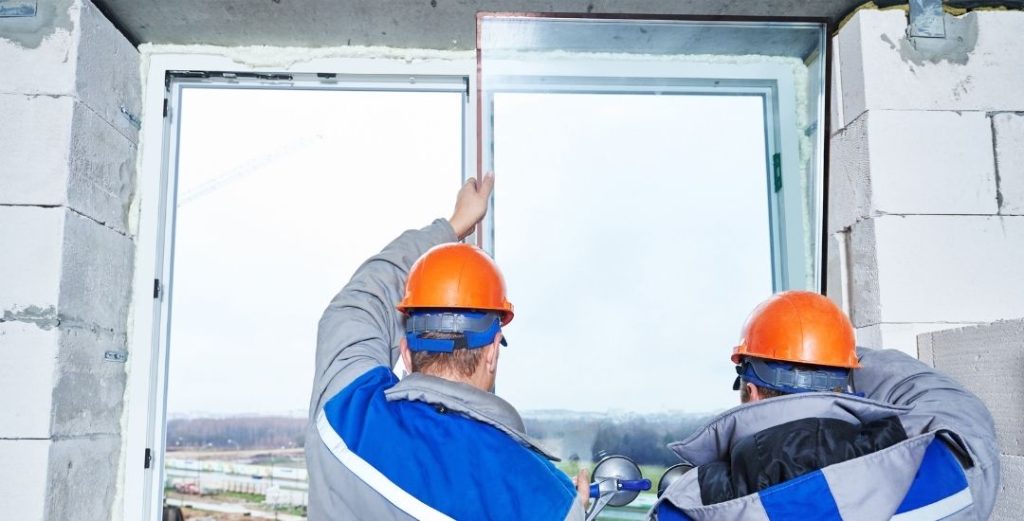

To achieve this qualification you must demonstrate competency in 8 core units and 14 elective units. You must complete 22 units in total: 8 core units covering safety, communication and glass handling fundamentals, plus 14 elective units covering cutting, assembly, installation and production scheduling.
Prerequisites: an asterisk (*) against a unit code indicates a prerequisite requirement. Prerequisite units must be assessed before assessment of any unit marked with an asterisk. All prerequisite requirements are packaged within the qualification.
| CODE | TITLE |
|---|---|
| CORE UNITS | |
| HLTAID011 | Provide First Aid |
| MSFGG2014 | Cut thin glass by hand |
| MSFGG2015 | Process glass by basic machines |
| MSFGG3039 | Manually move glass |
| MSFGN2001 | Make measurements and calculations |
| MSMENV272 | Participate in environmentally sustainable work practices |
| MSMSUP102 | Communicate in the workplace |
| MSMSUP106 | Work in a team |
| ELECTIVE UNITS | |
| CPCCWHS2001 | Apply WHS requirements, policies and procedures in the construction industry |
| MSFGG4017 | Apply standards and codes of practice for the glass and glazing industry |
| CPCCCM2006 | Apply basic levelling procedures |
| CPCWHS1001 | Prepare to work safely in the construction industry |
| MSFGN3001 | Read and interpret work documents |
| MSFGN3006 | Estimate and cost job |
| MSFGG2016 | Assemble glazing products |
| MSFGG3028 | Select, cut and process materials for glazing products |
| MSFGG3029 | Assess glass and glazing requirements |
| MSFGG3031 | Cut thick glass |
| MSFGG3032 | Mirror glass |
| MSFGG3034 | Install residential windows and doors |
| CPCCCM2012 | Work safely at heights |
| MSFGG4019 | Manage glass and glazing industry production scheduling |
| BSBWHS411 | Implement and monitor WHS policies, procedures and programs to meet legislative requirements |
Pacific College Sydney provides industry-relevant training and modern facilities so students develop practical skills that match current workplace expectations.
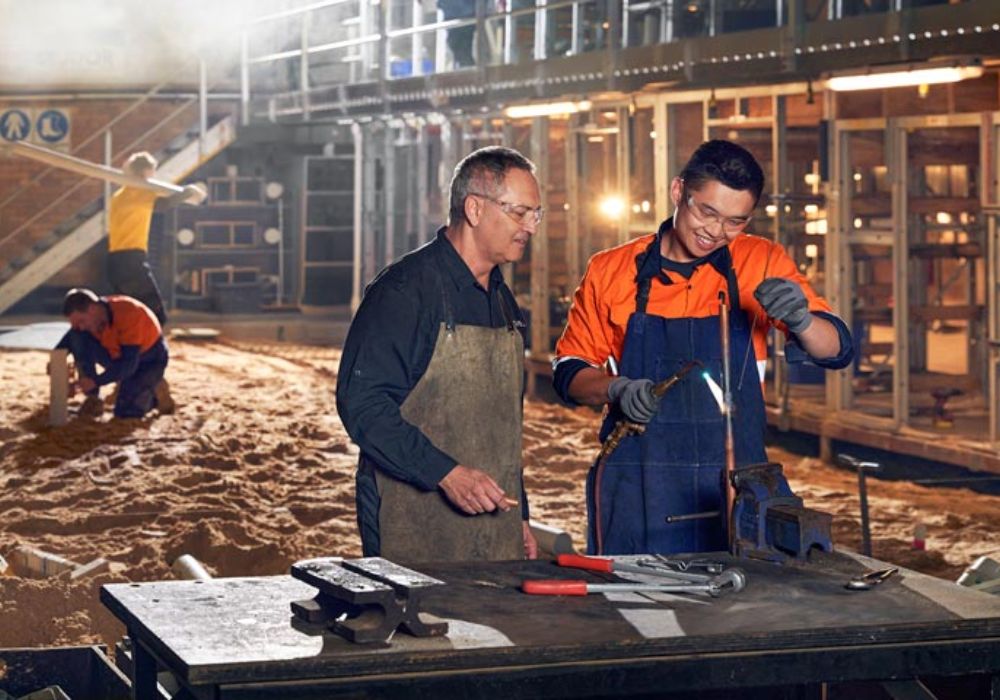
Classes and practical workshop sessions run at our Parramatta campus in the heart of Sydney’s second CBD, a short walk from Parramatta station and the light rail.
Applicants also complete a pre-enrolment review so we can identify any additional support you may need to finish the course successfully.
Most applicants who think they fall short actually have a pathway: through the LLN test, an EAP course, or prior study in Australia. Send us your details and we will tell you exactly where you stand and what is missing.
This qualification reflects the skills and knowledge required to work in the glass and glazing industry across a range of trade occupations.
Install, repair and replace glass products in residential, commercial and industrial settings.
Fit and install glass windows, doors and panels to industry standards.
Cut, process and prepare glass products using workshop machinery.
Assemble and fabricate glazing products for a range of applications.
Undertake a broad range of glazing tasks including estimating, cutting and installation.
Career opportunities exist within residential, commercial and industrial glazing projects involving glass processing, fabrication, installation and repair. Pacific College Sydney does not guarantee employment outcomes upon completion of this qualification.
Licensing and registration requirements differ between states and territories where relevant. Check with the relevant regulatory authority in the state where you intend to work.
Assessments are based on real workplace situations that meet industry standards, carried out in a simulated work environment to assess hands-on competency, collaboration and time management.
Methods include project work, presentations, reports, portfolios, case studies and short-answer questions. Assessment tasks:
Students are provided with clear instructions, templates and resources for each assessment task, an assessment plan for tracking due dates, and a cover sheet to be submitted with each task. Supporting documents, policies and procedures are set out in the student and assessor guides.
Students who do not meet competency requirements on an assessment have the opportunity to reassess, with the process and criteria provided in advance. Students may appeal assessment outcomes if they believe an assessment was not conducted fairly, under the college’s formal review process aligned with regulatory standards.
You can apply for course credit using past skills and experience, through credit transfer or recognition of prior learning. For international students, approved credit may reduce both your fees and your course duration, with written notice of the outcome and a new CoE if approved after your original CoE was issued.
Award issued: students who successfully complete this nationally recognised training are awarded the Certificate III in Glass and Glazing. Students who complete some but not all units receive a Statement of Attainment for the units achieved.


 Trustindex verifies that the original source of the review is Google.
 Trustindex verifies that the original source of the review is Google.
 Trustindex verifies that the original source of the review is Google.
 Trustindex verifies that the original source of the review is Google.
 Trustindex verifies that the original source of the review is Google.
Send your details. An admissions adviser confirms your eligibility, the fee that applies to you, and the next intake date.
Provide your Year 12 evidence, English results and White Card. If you do not meet the English requirement, complete the LLN test.
Receive a written offer with the full fee schedule. Accept, pay the deposit, and your CoE is issued for your visa application.
Complete enrolment, attend orientation at Parramatta, and start on your intake date.
The course runs for 52 weeks in total: 44 weeks of training and assessment, plus 8 weeks of scheduled term breaks. Weekly study is 15 hours face-to-face and practical training plus 5 hours online.
For the latest information on course fees, payment options, and upcoming intake dates, please contact our Admissions Team at admissions@pacific.edu.au.
Classroom training is delivered at our Parramatta campus, while practical workshop-based training takes place at our dedicated facility in Seven Hills, NSW.
Yes. Pacific College Sydney is a CRICOS-registered institution (Code: 04146E), fully authorised to deliver this course to international students in Australia.
You must be at least 18 years old, have completed Year 12 or equivalent, participate in a pre-enrolment interview and pre-training review, and provide IELTS 6.0 or equivalent English evidence.
You must wear Personal Protective Equipment during practical training, including safety boots, high-visibility clothing, safety glasses, cut-resistant gloves, a hard hat, hearing protection and protective clothing as required.
The course covers 22 units in total: 8 core units and 14 elective units, covering glass cutting, processing, assembly, installation and industry standards.
Yes. Pacific College Sydney offers credit transfer for formally completed units from another RTO, and Recognition of Prior Learning (RPL) for skills gained through work experience. Contact us before enrolling to find out if you qualify.
Graduates can pursue roles as a Glazier, Glass Installer, Glass Processor or Glass Fabricator, and may progress into MSF40122 Certificate IV in Glass and Glazing, CPC40120 Certificate IV in Building and Construction, or CPC50220 Diploma of Building and Construction.
Yes. You must be physically capable of standing for extended periods, lifting and carrying materials, using hand and power tools, working at heights, and performing practical tasks in workshop environments.
Send us your details and we will confirm your eligibility, the fee that applies to you, and the next available intake at Parramatta.