
A trade qualification for carpenters in residential and commercial workplaces, covering setting out, constructing, assembling and installing products made from timber and non-timber materials. Blended delivery with hands-on workshop sessions at Parramatta, taught by trainers who have worked the tools.
Full fee breakdown, intake dates and entry requirements, straight to your inbox.
Entry requirements, timelines and paperwork differ depending on where you are applying from. Pick the closest match and we will send you the right information.
You will need a Confirmation of Enrolment before you can apply for a student visa. We walk you through the sequence.
Transferring providers or moving into a trade qualification. Release and transfer rules apply, so talk to us first.
Placing students in trade qualifications. Request the agent pack with fees, intakes and commission terms.
We publish the full fee up front rather than asking you to call and find out. Approved course credit may reduce both your fees and your course duration.
Fees are for the full 104-week qualification. Approved course credit or recognition of prior learning may reduce both the fee and the duration. You will receive written notice of any change, and a new CoE if credit is approved after your original CoE has been issued.
By the end of this course you will have a strong set of practical carpentry skills, ready to handle key tasks on a building site with confidence.
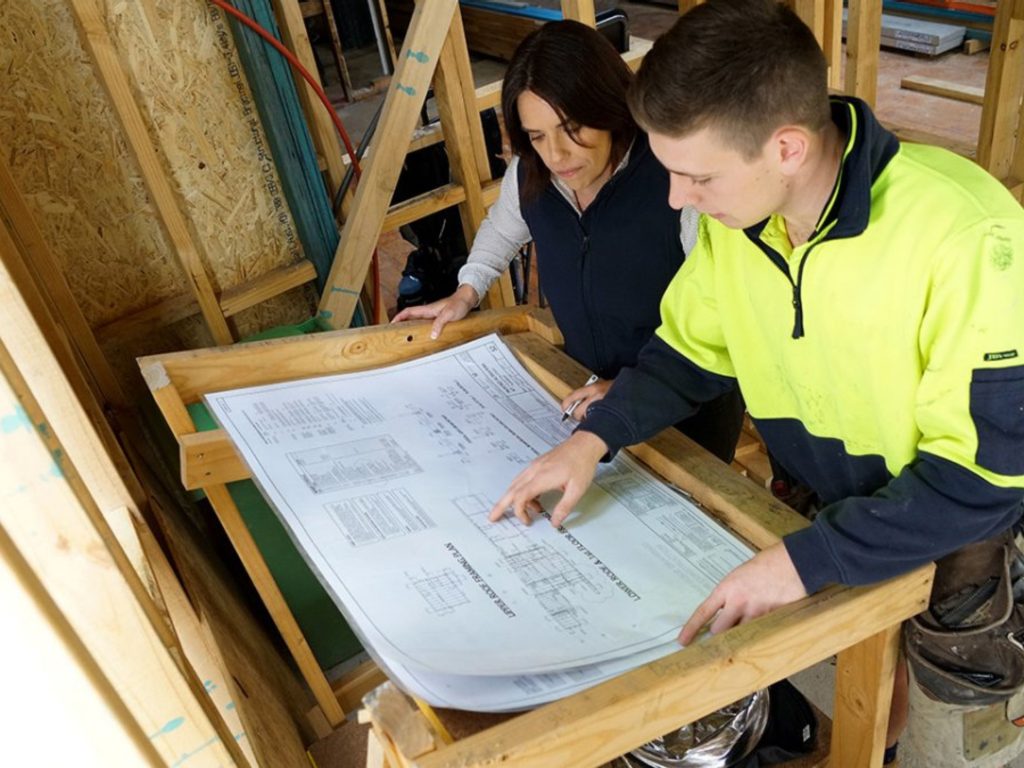
Understand building plans and carry out accurate measurements and calculations, the essential first step for any project.
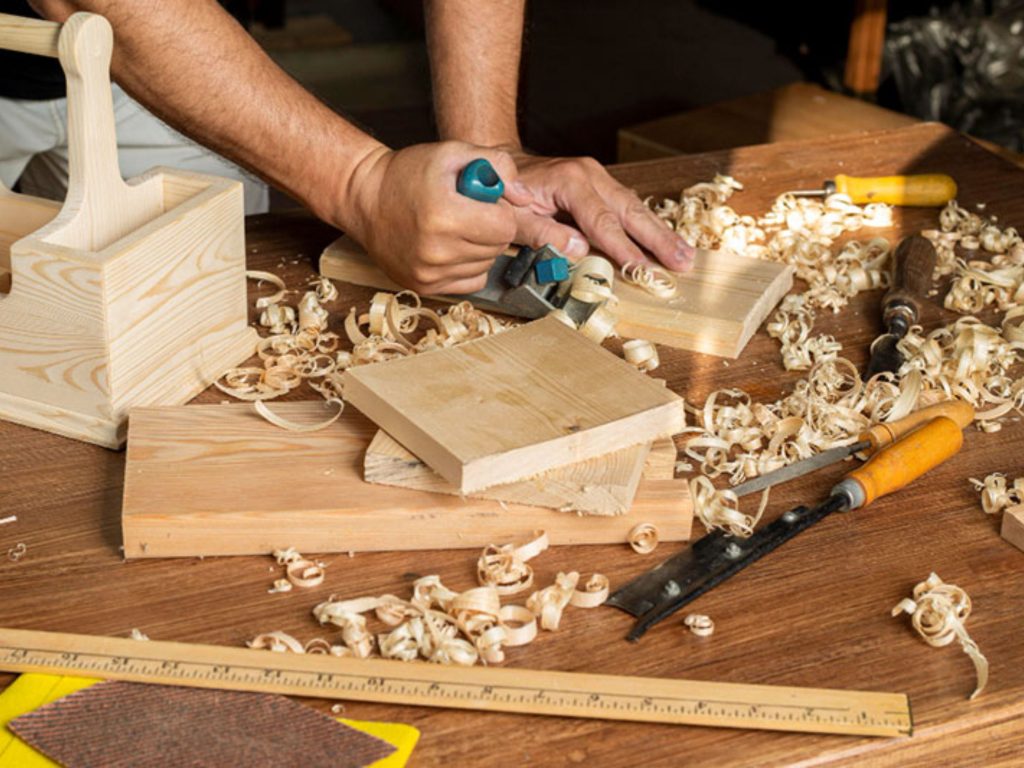
Become proficient with hand and power tools, and learn to correctly select, prepare and store construction materials.
Build the basic structure of a house, from the floor frame up through wall frames to the roof frame.
Correctly fit and install windows, external doors, and internal linings like architraves and skirting boards.
Understand and apply critical Work Health and Safety requirements to keep yourself and others safe.
Develop the communication and teamwork skills needed to succeed in the construction industry.
Theory has its place, but a stud wall is judged on the level, not on paper. Practical sessions run in purpose-built workshops that simulate real residential and commercial job sites, using the same tools, materials and safety systems you will meet on site.
To achieve this qualification you must demonstrate competency in 27 core units and 7 elective units. A minimum of five elective units must be selected from Group A, with the remainder from Group A or Group B. A maximum of two units can be selected from any group or current training package, as long as it contributes to a valid, industry-supported vocational outcome and maintains the AQF level of this qualification.
Prerequisites: an asterisk (*) against a unit code indicates a prerequisite requirement. Prerequisite units must be assessed before assessment of any unit marked with an asterisk. All prerequisite requirements are packaged within the qualification.
| CODE | TITLE |
|---|---|
| CORE UNITS | |
| CPCWHS3001 | Identify construction work hazards and select risk control strategies |
| CPCCOM1012 | Work effectively and sustainably in the construction industry |
| CPCCOM1014 | Conduct workplace communication |
| CPCCOM1015 | Carry out measurements and calculations |
| CPCCOM3001 | Perform construction calculations to determine carpentry material requirements |
| CPCCWHS2001 | Apply WHS requirements, policies and procedures in the construction industry |
| CPCCCA2002* | Use carpentry tools and equipment |
| CPCCCA2011* | Handle carpentry materials |
| CPCCCA3025* | Read and interpret plans, specifications and drawings for carpentry work |
| CPCCCA3001* | Carry out general demolition of minor building structures |
| CPCCCA3002* | Carry out setting out |
| CPCCCA3003* | Install flooring systems |
| CPCCCA3004* | Construct and erect wall frames |
| CPCCCA3005* | Construct ceiling frames |
| CPCCCA3006* | Erect roof trusses |
| CPCCCA3007* | Construct pitched roofs |
| CPCCCA3008* | Construct eaves |
| CPCCCA3010* | Install windows and doors |
| CPCCCA3016* | Construct, assemble and install timber external stairs |
| CPCCCA3017* | Install exterior cladding |
| CPCCCA3024* | Install lining, panelling and moulding |
| CPCCCA3028* | Erect and dismantle formwork for footings and slabs on ground |
| CPCCCM2006 | Apply basic levelling procedures |
| CPCCCM2008* | Erect and dismantle restricted height scaffolding |
| CPCCCM2012* | Work safely at heights |
| CPCCCO2013* | Carry out concreting to simple forms |
| CPCCOM3006 | Carry out levelling operations |
| Elective | |
| CPCCCM2002* | Carry out hand excavation |
| CPCCCM3001 | Operate elevated work platforms up to 11 metres |
| CPCCCA3012* | Frame and fit wet area fixtures |
| CPCCCA3014* | Construct and install bulkheads |
| CPCCCA3009* | Construct advanced roofs |
| CPCCOM1013 | Plan and organise work |
| CPCCCM3005 | Calculate costs of construction work |
Pacific College Sydney provides industry-relevant training and modern facilities so students develop practical skills that match current workplace expectations.

Classes and practical workshop sessions run at our Parramatta campus in the heart of Sydney’s second CBD, a short walk from Parramatta station and the light rail.
Applicants also complete a pre-enrolment review so we can identify any additional support you may need to finish the course successfully.
Most applicants who think they fall short actually have a pathway: through the LLN test, an EAP course, or prior study in Australia. Send us your details and we will tell you exactly where you stand and what is missing.
CPC30220 is the standard trade qualification for carpentry in Australia. Graduates work across residential and commercial construction, or build towards a formwork, shopfitting or supervisory specialisation.
The most common first step for a carpentry career: learning on the job under the guidance of experienced tradespeople.
Building and renovating houses, townhouses and units, from framing through to finishing interiors.
Working on larger projects such as office buildings, schools, hospitals and shopping centres.
A specialised role creating the moulds concrete is poured into to form walls, slabs and columns.
Fine, detailed carpentry for shops, cafes, bars and custom cabinetry, often in a workshop environment.
Repairing and renovating existing structures for building maintenance companies, councils or large facilities.
This certificate is the key requirement to begin a formal carpentry apprenticeship. After completing your apprenticeship and gaining on-site experience, you can apply for your full Carpenter’s or Builder’s Licence. The qualification is also a pathway to a Certificate IV in Building and Construction or a Diploma, and for some students, into university degrees in Construction Management.
Licensing and registration requirements for carpentry work differ between states and territories. Check with the relevant regulatory authority in the state where you intend to work.
Assessments are based on real workplace situations that meet industry standards, carried out in a simulated work environment to assess hands-on competency, collaboration and time management.
Methods include role-play-based projects, presentations, reports, portfolios, case studies and short-answer questions. Assessment tasks:
Students are provided with clear instructions, templates and resources for each assessment task, an assessment plan for tracking due dates, and a cover sheet to be submitted with each task. Supporting documents, policies and procedures for simulated workplace tasks are set out in the student and assessor guides.
Students who do not meet competency requirements on an assessment have the opportunity to reassess, with the process and criteria provided in advance. Students may appeal assessment outcomes if they believe an assessment was not conducted fairly, under the college’s formal review process aligned with regulatory standards.
You can apply for course credit using past skills and experience, through credit transfer or recognition of prior learning. For international students, approved credit may reduce both your fees and your course duration, with written notice of the outcome and a new CoE if approved after your original CoE was issued.
Award issued: students who successfully complete this nationally recognised training are awarded the CPC30220 Certificate III in Carpentry. Students who complete some but not all units receive a Statement of Attainment for the units achieved.
 Posted on Google
 Sayeed Parvez
Trustindex verifies that the original source of the review is Google.
Posted on Google Daljeet SinghExcellence service with great sager paudel sirPosted on Google
 Fong Kwok
Send your details. An admissions adviser confirms your eligibility, the fee that applies to you, and the next intake date.
Provide your Year 12 evidence, English results and White Card. If you do not meet the English requirement, complete the LLN test.
Receive a written offer with the full fee schedule. Accept, pay the deposit, and your CoE is issued for your visa application.
Complete enrolment, attend orientation at Parramatta, and start on your intake date.
The tuition fee is AU$16,000, the material fee is AU$1,500 and the enrolment fee is AU$250, giving an estimated total course cost of AU$17,750 for the full 104-week qualification. Approved course credit or recognition of prior learning may reduce both the fee and the duration.
104 weeks in total: 89 weeks of training and assessment plus 15 weeks of holiday. Study is 20 hours per week, made up of 15 hours face-to-face on campus and 5 hours online.
At Level 4, 79 George Street, Parramatta NSW 2150, Sydney. Practical workshop sessions and face-to-face classes are held on campus, with the online component completed remotely.
No prior carpentry or construction experience is required. The qualification starts from using tools and handling materials safely, and builds through setting out, framing and installation. If you do have relevant experience, you may be able to apply for course credit.
Academic IELTS 6.0 overall with no band below 5.5, or one of the accepted alternatives:
Applicants who do not meet these will need to complete an LLN test before enrolment.
34 units: 27 core and 7 elective. A minimum of five elective units must be selected from Group A, with the remainder from Group A or Group B, up to a maximum of two units from any group or current training package that supports a valid, industry-supported vocational outcome at this AQF level.
Yes. You can apply for course credit through credit transfer or recognition of prior learning. Applications are assessed fairly and, for international students, approved credit may reduce your fees and course duration. You will receive written notice of the outcome, and a new CoE showing the updated duration if credit is approved after your original CoE was issued. Full details are in the International Student Handbook.
You have the opportunity to be reassessed. The re-assessment process and criteria are provided in advance. If you believe an assessment was not conducted fairly, there is a formal appeals process that operates in line with regulatory standards.
Students who successfully complete the training are awarded the CPC30220 Certificate III in Carpentry, a nationally recognised qualification. If you complete some but not all units, you receive a Statement of Attainment for the units achieved.
Graduates commonly start as a carpentry apprentice, then move into residential or commercial carpentry, formwork, shopfitting and joinery, or maintenance carpentry. The qualification is the key entry requirement for a formal carpentry apprenticeship, and a pathway towards a Certificate IV in Building and Construction, a Diploma, or your own Carpenter’s or Builder’s Licence. Licensing requirements differ between states and territories.
Send us your details and we will confirm your eligibility, the fee that applies to you, and the next available intake at Parramatta.