
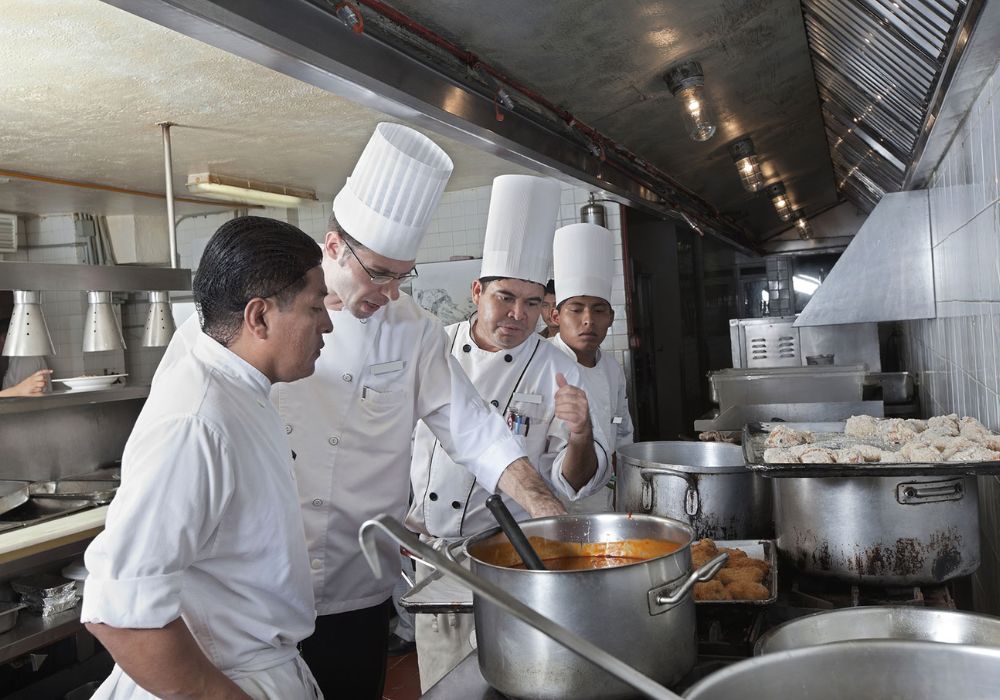
A kitchen manager plays a vital role in every smooth-running commercial kitchen. From coordinating staff rosters and managing stock to maintaining food quality and controlling costs, kitchen managers balance hands-on cooking knowledge with strong organisational skills and strong leadership.
Roles and Responsibilities of a Kitchen Manager
While most chefs often receive the spotlight, kitchen managers are the backbone of day-to-day kitchen success, using skills gained through experience and professional kitchen management training.
Let’s take a closer look at their roles and responsibilities.
Daily Kitchen Operations
Daily kitchen operations are at the heart of a kitchen manager’s role. This includes organising prep work, coordinating service times and ensuring recipes are followed correctly. A kitchen manager helps prevent unexpected issues by planning and keeping the team focused during service.
Efficiency also plays a critical role. Kitchen managers design workflows, manage task allocation during peak periods and ensure the right staff are in the right place at the right time. Kitchen managers also make sure the service quality, that contribute directly to the long-term success and profitability of a food service business.
Staff Management as a Kitchen Manager
Staff management is one of the most important responsibilities of a kitchen manager. This includes handling conflict and maintaining team morale. Working in a commercial kitchen can be stressful. Kitchen managers are often responsible for resolving issues quickly and fairly. A positive team culture leads to better communication, improved efficiency and higher staff retention.
In real-life kitchens, strong leadership makes a noticeable difference. Teams led by organised and supportive kitchen managers tend to work more smoothly and handle pressure better. Effective staff management supports a more productive and successful kitchen environment.
Food Safety and Compliance
Ensuring food safety and compliance is a key part of a kitchen manager’s role. A commercial kitchen must meet strict food safety standards. Kitchen managers are making sure their team follows the food standards every day.
Kitchen managers also oversee hygiene practices, prevent cross-contamination, conduct inspections, document ongoing responsibilities, and monitor all these activities continuously. Active management of food safety and compliance ensures the long-term success of the business, creating a professional and trustworthy kitchen environment.
Inventory and Cost Control for a Kitchen Manager
Managing inventory and controlling costs are crucial responsibilities for a kitchen manager. They ensure that the kitchen has the right ingredients in the right quantities without overstocking, which can lead to waste. This involves monitoring stock levels, placing orders with suppliers, and tracking deliveries.
Cost control is equally important, as food and labour are the largest expenses in this industry. Kitchen managers use budgeting tools to monitor spending, adjust portion sizes, and reduce waste wherever possible. For example, careful inventory management can prevent over-purchasing perishable items, saving money and keeping the kitchen efficient.
Equipment and Facility Management
A kitchen manager is also responsible for overseeing all kitchen equipment and the overall facility. This includes ensuring that appliances, ovens, fridges, and other tools are functioning correctly and safely. Regular maintenance and timely repairs prevent unexpected breakdowns that could disrupt service or compromise food quality.
Organising the kitchen layout is another key task. For example, placing prep stations near cooking areas and storing ingredients within easy reach can save time and reduce stress.
Key Skills Required for a Kitchen Manager
A kitchen manager’s role is a combination of culinary, leadership, and business skills.
Culinary and Technical Skills: Kitchen managers need strong cooking knowledge, expertise in food safety, and the ability to standardise recipes and control portion sizes. This ensures consistency and quality across all dishes.
Leadership and Communication Skills: Managing a team effectively requires clear communication, mentoring, and conflict resolution. A strong leader motivates staff, maintains morale, and fosters a positive kitchen culture.
Business and Organisational Skills: Time management, scheduling, and budgeting are vital for controlling costs and maintaining smooth operations.
Personal Traits: Attention to detail, problem-solving abilities, and the ability to perform under pressure are also crucial for a successful kitchen manager.
Career Growth and Advancement Opportunities for Kitchen Managers
A career as a kitchen manager offers multiple pathways. Many kitchen managers progress to executive chef roles, where they take on greater responsibilities like menu creation, kitchen strategy, and overall food operations.
Others move into restaurant or operations management, overseeing multiple outlets or larger teams, or into corporate hospitality positions with hotels, catering companies, or food service organisations. Some may even pursue entrepreneurship, opening their own restaurant, café, or catering business, leveraging the skills they’ve developed in kitchen leadership and operations.
With experience, professional training, and qualifications, kitchen managers can advance their careers, earn higher salaries, and gain broader leadership opportunities in the sector.
How to Become a Kitchen Manager: Career Path
Becoming a kitchen manager typically involves a combination of practical experience, formal training, and professional development. Most start their careers in entry-level kitchen roles. Entry-level roles involve prep cook, line cook, or kitchen hand. These positions provide hands-on experience in food preparation, kitchen workflow, and teamwork.
From there, aspiring kitchen managers can progress to supervisory or lead cook roles. Formal education, like a Certificate IV in Kitchen Management, helps develop leadership, food safety, and operational skills that are essential for management roles.
Study Kitchen Management with Pacific College Sydney
As a kitchen manager, key roles start from coordinating staff schedules, managing inventory, maintaining food quality, controlling costs, and overall balancing culinary knowledge with operational expertise. Their work directly impacts customer satisfaction, team performance, and the overall profitability of a food service business.
If you are looking for a fast-track kitchen management career, studying a Certificate IV in Kitchen Management at Pacific College Sydney can help. It provides the knowledge and skills you need to succeed in this industry.
This nationally recognised course combines practical training with theoretical learning, covering areas such as staff supervision, food safety, inventory management, and kitchen operations. Students gain hands-on experience in a commercial-style kitchen, learning how to manage real-world scenarios under the guidance of experienced trainers.
The course also develops leadership, communication, and business skills, preparing graduates to take on management roles in restaurants, cafés, hotels, or catering businesses.
Enroll now and get into a rewarding career in kitchen leadership.