
Train as a solid plasterer in Sydney, with classroom sessions at our Parramatta campus and hands-on render and set coat practice at our Seven Hills workshop. The course suits school leavers, career changers and international students who want a trade they can use on Sydney homes, apartments and commercial builds. Every unit and requirement is listed on the main CPC31020 course page.
Full fee breakdown, intake dates and entry requirements, straight to your inbox.
The steps to enrol depend on whether you already live in Sydney or are planning the move from overseas. Pick the option closest to your situation and our admissions team will send the information that applies to you.
You will need a Confirmation of Enrolment before you can apply for a student visa. We walk you through the sequence.
Transferring providers or moving into a trade qualification. Release and transfer rules apply, so talk to us first.
Placing students in trade qualifications. Request the agent pack with fees, intakes and commission terms.
For the latest information on course fees and payment options, please contact our Admissions Team at admissions@pacific.edu.au.
Our team will be happy to assist you with current tuition fees, additional charges, available payment options, and upcoming course intakes.
| Year | Term | First Intake | Mid Intake | Break/Holiday Intake* |
|---|---|---|---|---|
| 2026 | Term 3 | 6 Jul 2026 | 10 Aug 2026 | 14 Sep 2026 |
| Term 4 | 6 Oct 2026 (Tue) | 9 Nov 2026 | 14 Dec 2026 | |
| 2027 | Term 1 | 4 Jan 2027 | 8 Feb 2027 | 15 March 2027 |
| Term 2 | 5 Apr 2027 | 10 May 2027 | 14 June 2027 | |
| Term 3 | 5 Jul 2027 | 9 Aug 2027 | 13 September 2027 | |
| Term 4 | 5 Oct 2027 (Tue) | 8 Nov 2027 | 13 December 2027 | |
| 2028 | Term 1 | 3 Jan 2028 | 7 Feb 2028 | 13 March 2028 |
| Term 2 | 3 Apr 2028 | 8 May 2028 | 12 June 2028 | |
| Term 3 | 3 Jul 2028 | 7 Aug 2028 | 11 September 2028 | |
| Term 4 | 3 Oct 2028 (Tue) | 6 Nov 2028 | 11 December 2028 |
Note: The Term 4 intake dates for 2026, 2027, and 2028 have been adjusted to commence on the first business day following the NSW Labour Day public holiday, which falls on the first Monday of October each year.
Accordingly:
All enrolment periods will continue for two weeks from the respective intake commencement dates.
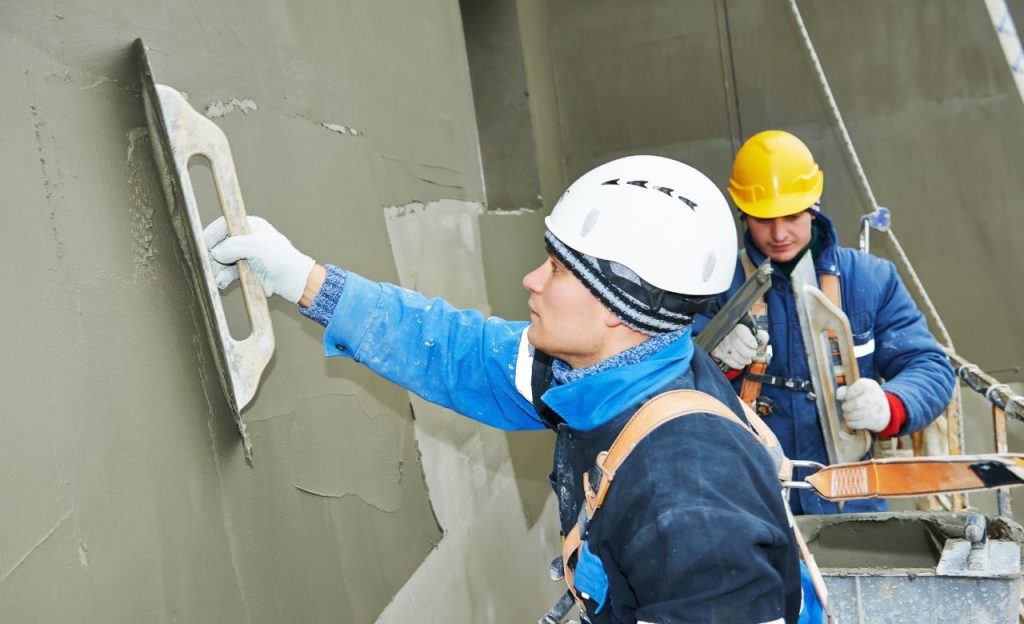
By the end of the course you will be able to plaster, render and finish walls to the standard Sydney builders and renovators expect, from new rendered facades to careful repairs on older homes.
Work safely to WHS requirements, policies and procedures on construction sites.
Read and interpret plans and specifications for plastering work.
Handle solid plastering materials and use the right tools and equipment.
Prepare surfaces correctly ahead of plastering application.
Apply float and render finishes to straight and curved surfaces.
Apply set coats and trowelled texture finishes, and restore existing plasterwork.
Rendered brick and block walls are a common finish across Sydney, from new townhouses in the north-west growth areas to apartment blocks along the rail corridors. Older suburbs in the inner west and eastern suburbs also hold plenty of terraces and Federation homes with original solid plaster that needs careful repair.
That mix gives qualified plasterers real variety. This course teaches the wet side of the trade (render, float, set coats and textured finishes), which is different from plasterboard fixing. It sits alongside our other trade courses in Sydney, so you can compare options before you apply.
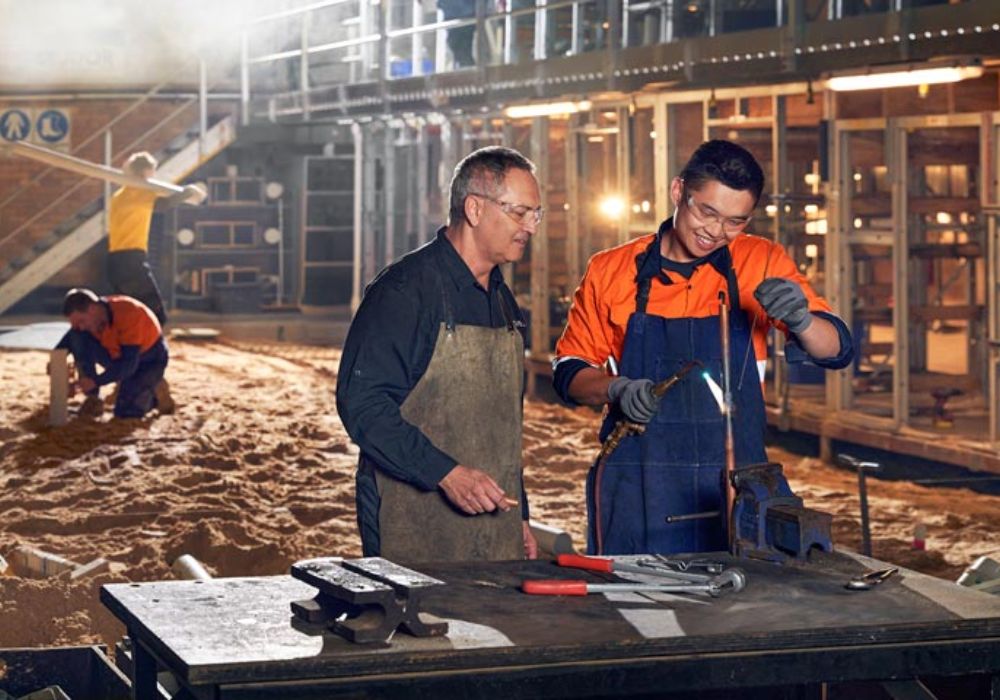
You complete 20 units: 15 core units and 5 electives. The core units start with construction basics such as WHS, measurements, levelling and reading plans, then move into the specialist plastering units. The electives add working at heights, elevated work platforms, trestle and plank systems, and acoustic and thermal insulation.
Prerequisites: an asterisk (*) against a unit code indicates a prerequisite requirement. Prerequisite units must be assessed before assessment of any unit marked with an asterisk. All prerequisite requirements are packaged within the qualification.
| Core Units | Description |
|---|---|
| CPCCWHS2001 | Apply WHS requirements, policies and procedures in the construction industry |
| CPCCOM1012 | Work effectively and sustainably in the construction industry |
| CPCCOM1013 | Plan and organise work |
| CPCCOM1014 | Conduct workplace communication |
| CPCCOM1015 | Carry out measurements and calculations |
| CPCCCM2006 | Apply basic levelling procedures |
| CPCCOM2001* | Read and interpret plans and specifications |
| CPCCCM2008* | Erect and dismantle restricted height scaffolding |
| CPCCSP2001* | Handle solid plastering materials |
| CPCCSP2002* | Use solid plastering tools and equipment |
| CPCCSP2003* | Prepare surfaces for plastering |
| CPCCSP3001* | Apply float and render to straight and curved surfaces |
| CPCCSP3002* | Apply set coats |
| CPCCSP3003* | Apply trowelled texture coat finishes |
| CPCCSP3004* | Restore and renovate solid plasterwork |
| Elective Units | Description |
| CPCWHS1001 | Prepare to work safely in the construction industry |
| CPCCCM2012* | Work safely at heights |
| CPCCCM3001 | Operate elevated work platforms to 11 metres |
| CPCCPB3026* | Erect and maintain trestle and plank systems |
| CPCCPB3015* | Install acoustic and thermal environmental protection systems |
Your week is split between theory in Parramatta and practical sessions in a workshop set up for wet trade work. Both locations are on the Sydney train network, which helps if you live further out and do not drive.
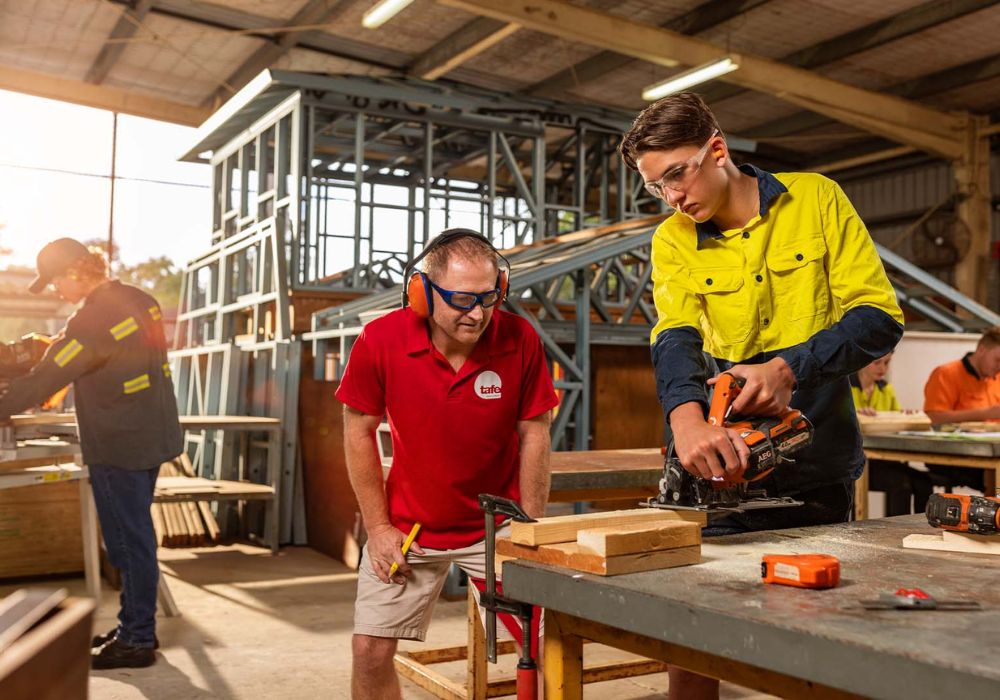
Classroom sessions run at Level 4, 79 George Street, Parramatta, a short walk from Parramatta station and the light rail. Practical plastering sessions take place at our Seven Hills workshop in western Sydney, a suburb with its own train station.
Applicants also complete a pre-enrolment review so we can identify any additional support you may need to finish the course successfully.
Most applicants who think they fall short actually have a pathway: through the LLN test, an EAP course, or prior study in Australia. Send us your details and we will tell you exactly where you stand and what is missing.
Sydney building activity covers new housing, apartment construction and a large renovation market. Qualified solid plasterers can work across all three, usually starting with a plastering contractor and, with experience and the right licence, taking on their own jobs.
Render and finish walls on Sydney homes, townhouses and apartment projects.
Apply cement and decorative render to exterior walls and facades.
Run your own plastering business once you hold the NSW licence needed for residential work.
Repair original plasterwork in Sydney terraces, Federation homes and older buildings.
Coordinate plastering crews and quality on larger residential or commercial sites.
In NSW, residential plastering work valued at more than $5,000 needs a contractor licence from NSW Fair Trading, and wet (solid) plastering is assessed against a Certificate III in Solid Plastering. Check the current NSW wet plastering licence requirements before you apply. Graduates can also progress into CPC40120 Certificate IV or CPC50220 Diploma qualifications. Pacific College Sydney does not guarantee employment outcomes.
Licensing and registration requirements differ between states and territories where relevant. Check with the relevant regulatory authority in the state where you intend to work.
Assessments are based on real workplace situations that meet industry standards, carried out in a simulated work environment to assess hands-on competency, collaboration and time management.
Methods include project work, presentations, reports, portfolios, case studies and short-answer questions. Assessment tasks:
Students are provided with clear instructions, templates and resources for each assessment task, an assessment plan for tracking due dates, and a cover sheet to be submitted with each task. Supporting documents, policies and procedures are set out in the student and assessor guides.
Students who do not meet competency requirements on an assessment have the opportunity to reassess, with the process and criteria provided in advance. Students may appeal assessment outcomes if they believe an assessment was not conducted fairly, under the college’s formal review process aligned with regulatory standards.
You can apply for course credit using past skills and experience, through credit transfer or recognition of prior learning. For international students, approved credit may reduce both your fees and your course duration, with written notice of the outcome and a new CoE if approved after your original CoE was issued.
Award issued: students who successfully complete this nationally recognised training are awarded the Certificate III in Solid Plastering. Students who complete some but not all units receive a Statement of Attainment for the units achieved.


 Trustindex verifies that the original source of the review is Google.
 Trustindex verifies that the original source of the review is Google.
 Trustindex verifies that the original source of the review is Google.
 Trustindex verifies that the original source of the review is Google.
 Trustindex verifies that the original source of the review is Google.
Send your details. An admissions adviser confirms your eligibility, the fee that applies to you, and the next intake date.
Provide your Year 12 evidence, English results and White Card. If you do not meet the English requirement, complete the LLN test.
Receive a written offer with the full fee schedule. Accept, pay the deposit, and your CoE is issued for your visa application.
Complete enrolment, attend orientation in Parramatta, then start classes on your intake date.
Theory classes run at our Parramatta campus at Level 4, 79 George Street. Practical plastering sessions are held at our workshop in Seven Hills, in western Sydney.
The course runs for 52 weeks: 44 weeks of training and assessment plus 8 weeks of term breaks. Each week includes 15 hours of face-to-face and workshop training and about 5 hours of online study.
There are several intakes each term, including holiday intakes. The intake table on this page lists the current dates for 2026 to 2028, or our admissions team can confirm the next start date for you.
Yes. Pacific College Sydney is a CRICOS registered provider (04146E) and this course is CRICOS registered (120746D), so it can be studied on a student visa.
You can work under a licensed contractor while you build experience. To contract for residential plastering work valued at more than $5,000, NSW Fair Trading requires a contractor licence, and the qualification you hold forms part of that application.
No. Solid plastering (also called wet plastering) covers render, float and set coats applied to masonry. Plasterboard fixing is dry plastering, which NSW treats as a separate licence category.
Yes. You need a White Card (general construction induction) for practical construction work, and our admissions team asks for it during the assessment step.
Fees depend on whether you are a domestic or international student and on any credit you receive. Email admissions@pacific.edu.au or send an enquiry for the current fee schedule.
Send us your details and our admissions team will confirm your eligibility, the fee that applies to you, and the next intake at Parramatta.