
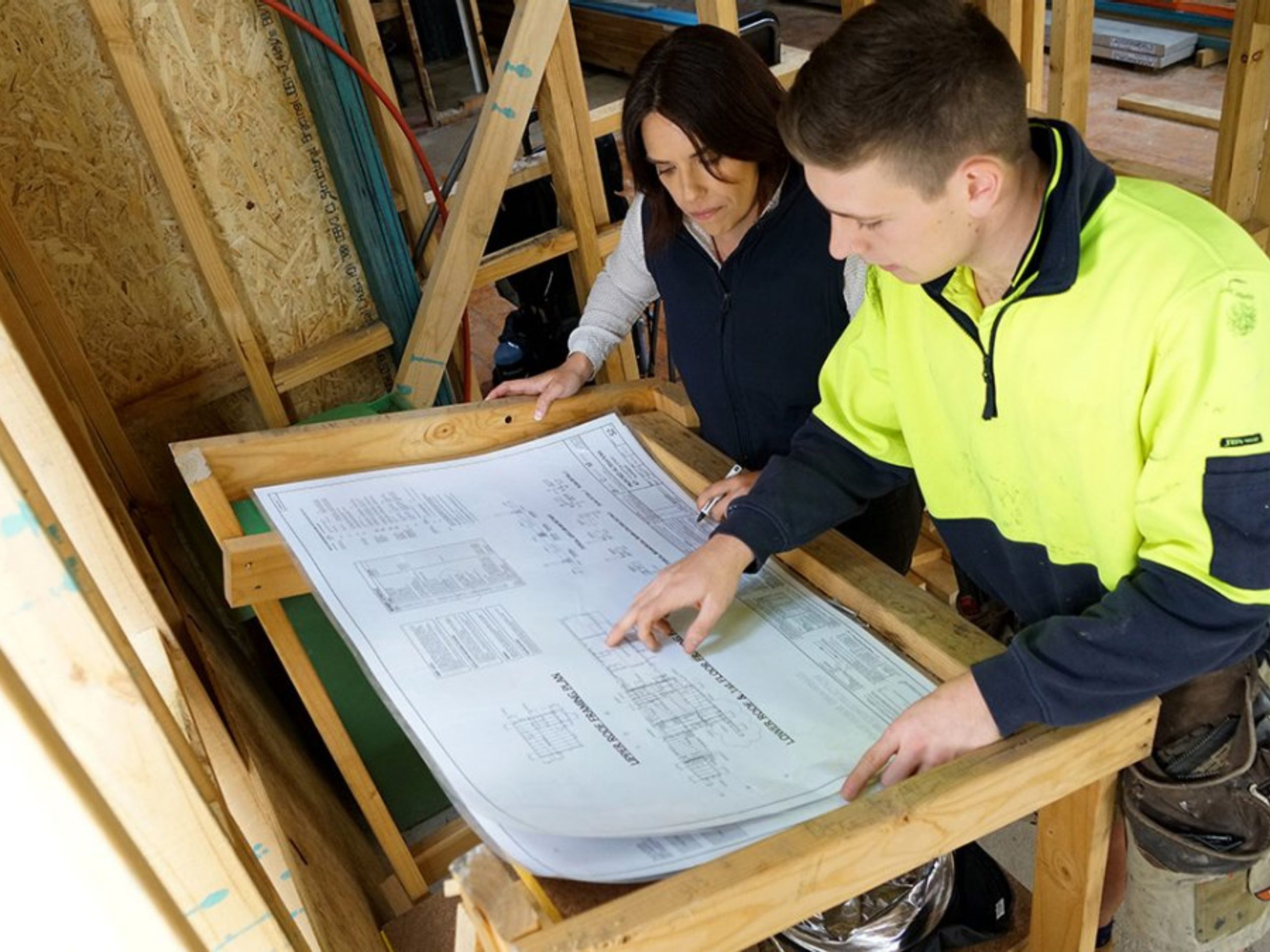
The CPC30220 Certificate III in Carpentry gives you formal recognition, better job security, stronger earning power, and access to licensing pathways. It showcases your capability to employers that you meet industry standards and can perform safely and competently on site.
This qualification holds value across Australia.
Core Skills That Help You Launch a Career in Carpentry
The CPC30220 Certificate III in Carpentry is hands-on from day one. You’ll spend hundreds of hours learning the actual skills qualified carpenters use on-site every day.
- Tools of the Trade: CPCCCA2002 gives you around 96 hours of practical tool training, covering everything from a hammer to a compound mitre saw. You’ll learn which tool suits each job, how to maintain them, and how to use them safely.
- Safety: Safety runs through every part of this course. You’ll complete your White Card training (CPCCWHS2001), learn to work safely at heights (CPCCCM2012), and identify site hazards before they cause problems (CPCWHS3001).
- Reading Plans and Doing the Maths: CPCCCA3025 is the industry standard for reading and interpreting plans. CPCCCA3025 teaches you to read architectural drawings, understand symbols, dimensions, and specifications. CPCCOM1015 and CPCCOM3001 cover the calculations needed to work out material quantities and avoid costly mistakes. CPCCOM3001 is vital for the “trade math” required for stairs and roof pitches.
- Setting Out The Job: CPCCCA3002 teaches you to use levels, laser equipment, and string lines to mark exactly where walls and footings go. Get this right, and everything else follows.
- Floors, Walls, and Roofs: This is the core of the course. You’ll install flooring systems, construct wall frames, build ceiling frames, erect roof trusses, and cut pitched roofs, including hips and valleys.
- Windows, Doors, and Finishes: You’ll fit windows and doors (70 hours of training), install exterior cladding, and apply lining and mouldings that give interiors a professional finish.
- Formwork, Stairs, and Scaffolding: You’ll build formwork for concrete footings and slabs, construct timber stairs with precise step calculations, and erect restricted height scaffolding.
Why This Qualification Matters for a Secure Career in Carpentry
The CPC30220 Certificate III in Carpentry is Australia’s recognised pathway to becoming a qualified carpenter. Most employers won’t consider you fully trade-qualified without it.
A Nationally Recognised Standard
The CPC30220 sits within the Construction, Plumbing and Services Training Package, which sets consistent skill standards across every state and territory. Your qualification holds the same value in Sydney, Brisbane, Perth, or regional Australia.
Licensing and Career Access
In many parts of Australia, this certificate is required before you can apply for a contractor or builder licence. Without formal qualifications, your career options are limited. With it, you can pursue higher pay, step into leadership roles, or run your own business.
Strong Industry Demand
Carpentry continues to appear on several state skilled occupation lists, driven by ongoing housing and infrastructure projects. Australia’s construction industry contributes over 9 per cent of national GDP, and skilled carpenters sit at the centre of it.
In Australia, there is a real shortage of carpenters. The Housing Industry Association says we need an extra 22,020 to meet the national housing target, and carpentry currently has a shortage rating of -0.74. Nearly 160,000 people search for carpentry services every year. When you finish this 950-hour course, you graduate ready to work and in real demand.
Better Pay and Earning Potential
Qualified carpenters earn significantly more than apprentices on training wages. According to recent industry data, the average full-time carpenter in Australia earns between $70,000 and $90,000 per year, depending on experience and location. Subcontractors and business owners can earn more.
Long-Term Career Stability
Construction skills are practical and transferable. Even during economic slowdowns, maintenance, renovations, and essential building work keep going. Qualified carpenters are far less likely to struggle for work than unqualified labourers.
Career Opportunities After CPC30220
Completing the CPC30220 moves you from apprentice to qualified tradesperson, opening up real choices in where you work, what you earn, and where your career goes.
Residential Carpentry
Most graduates start here, working on new home builds, extensions, and renovations. Australia’s ongoing housing investment, particularly around major city growth corridors, keeps residential construction a steady source of work.
Commercial Construction
Commercial carpenters work on schools, offices, retail centres, and apartment buildings. These projects run to stricter compliance standards but typically offer consistent hours and strong wages.
Formwork Carpentry
Formwork carpenters build temporary moulds that hold concrete in place for slabs, columns, and foundations. Major infrastructure projects like bridges and roads depend on this skill, and with significant government infrastructure spending continuing across Australia, formwork specialists stay in demand.
Renovations and Maintenance
Renovation work demands problem-solving, especially in older homes where you may encounter uneven surfaces or hidden damage. Builders value carpenters who can deliver clean results in tight spaces.
Supervisory Roles
With experience, you can move into a leading hand or site supervisor position, coordinating tasks, managing materials, and ensuring safety compliance. Employers prefer supervisors with trade qualifications because they understand what actually happens on site.
Self-Employment and Contracting
After gaining experience and meeting your state’s licensing requirements, you can register as a contractor or builder. It comes with added responsibility, but running your own business can significantly increase your income.
| Are you ready to turn practical skills into a recognised trade qualification and start building a secure, well-paid career in carpentry with the CPC30220 Certificate III? If you are serious about building a long-term career in carpentry, Pacific College Sydney can guide you every step of the way. As a trusted training provider, Pacific College Sydney delivers the CPC30220 Certificate III in Carpentry with practical training, experienced trainers, and strong industry links. You gain real site skills, compliance knowledge, and career support. Contact us today to discuss enrollment options and take the next step towards becoming a qualified carpenter. |