
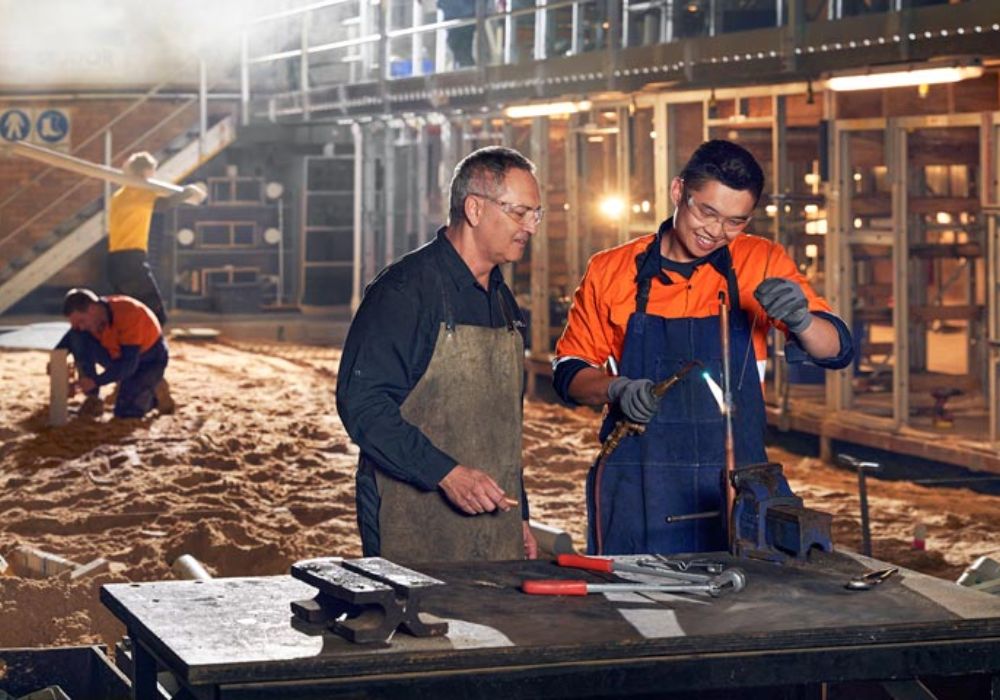
If you love working with your hands and want a career that’s practical, stable, and well-paid, trade courses in Sydney could be your ticket to success. Across Australia, skilled trades are in high demand, and Sydney stands at the centre of that opportunity.
From carpentry and plumbing to automotive repair and commercial cookery, Sydney’s trade schools and training institutions give you the tools to build a career that lasts.
What Are Trade Courses?
Trade courses, also known as vocational education and training (VET), are designed to teach job-ready, hands-on skills that employers actually need. You don’t just sit in classrooms; you learn by doing. Whether that’s fixing engines, wiring homes, cooking in professional kitchens, or building homes from the ground up. These courses turn practical experience into professional qualifications.
You can start with a Certificate II or III, progress to Certificate IV, and even move into a Diploma if you want to lead teams or run your own business. These qualifications are nationally recognised under the Australian Qualifications Framework (AQF).
Why Trade Courses Matter in Sydney
According to Jobs and Skills Australia (2024), skilled trade occupations remain among the most in-demand roles in Australia. Sectors like building and construction, automotive, and hospitality consistently face worker shortages, offering thousands of job openings every year.
For anyone chasing job security and good income potential, learning a trade isn’t just an option. It’s a solid investment in your future. Sydney, with its fast-growing industries and massive infrastructure projects, provides endless opportunities for trained professionals.
Popular Trade Courses in Sydney
Sydney’s trade training options are incredibly diverse. Some of the most sought-after programs include:
Building and Construction – Learn carpentry, plumbing, tiling, air-conditioning, refrigeration, or bricklaying. Graduates often step directly into the workforce or start their own small businesses.
Automotive Technology – Courses in mechanical and electrical technology prepare you for careers maintaining and repairing vehicles of all kinds.
Engineering Trades – Fabrication, welding, and instrumentation are essential for manufacturing, construction, and infrastructure projects.
Hospitality and Commercial Cookery – Sydney’s dining scene thrives on skilled chefs and kitchen staff. Commercial cookery qualifications open doors to restaurants, hotels, and catering businesses.
Other Skilled Trades – Areas like glass and glazing, painting and decorating, or solid plastering offer solid career paths for those who prefer specialised, hands-on work.
Where to Study Trade Courses in Sydney
TAFE NSW is one of the largest and most respected providers of trade training in Australia. With state-of-the-art workshops and experienced instructors, TAFE NSW delivers courses in building, automotive, and engineering trades. Many apprenticeships and traineeships are government-funded and include paid on-the-job training.
Trades College Australia (TCA) offers flexible trade qualifications and assessments, especially for those with prior experience. Students can gain recognition of prior learning (RPL) to complete missing units and fast-track their qualifications.
Several other registered training organisations (RTOs) and private colleges around Sydney also provide trade courses tailored to industry needs.
And yes, Pacific College Sydney is here to help you figure out which path fits best. Whether you’re starting fresh or upgrading your current skills, we’re here to make your study choices simple and stress-free.
Apprenticeships and Traineeships
In Sydney, apprenticeships usually last four years and mix classroom learning with full-time, paid work. This path suits Australian students who want to earn while they learn under a qualified tradesperson.
International students, however, follow a slightly different route. They can complete a one- to two-year trade course at an accredited provider, including vocational placement (around 360 hours) on a real worksite. The outcome is the same nationally recognised qualification.
According to the National Centre for Vocational Education Research (NCVER), as of 31 December 2024 there were 311,760 apprentices and trainees nationally in training. Of these, 220,920 were in trade occupations.
Career Opportunities and Migration Pathways
Completing a trade course can open the door to exciting career options and even permanent residency for international students.
Many trade occupations feature on the Medium and Long-Term Strategic Skills List (MLTSSL), such as carpenters, electricians, plumbers, and chefs. Graduates may apply for skilled migration visas like subclass 189, 190, or 491, depending on their qualifications and experience.
International students who finish two years of study can also apply for the Temporary Graduate Visa (subclass 485), allowing them to live and work in Australia for two to four years. This helps them gain valuable industry experience and earn extra points for permanent residency.
Costs and Entry Requirements
Trade course costs depend on your provider, duration, and visa status. For international students, a full Certificate III or IV may cost between AUD 20,000 – 35,000, according to Global Select Education (2025).
Entry requirements vary. Usually, you’ll need to be at least 16 years old, meet English language standards (IELTS 5.5 or higher), and hold a valid student visa. Some courses may also require a vocational placement agreement or prior study.
The Benefits of Studying a Trade
Learning a trade gives you practical skills that pay off quickly. You can start earning sooner, avoid big university debt, and build a career in industries that need you.
Skilled trades are also portable, your qualifications are recognised across Australia and, in many cases, internationally. And if you enjoy problem-solving, teamwork, and seeing the results of your work every day, you’ll find enormous satisfaction in these roles.
Facts You Should Know
- Australia is expected to need around 90,000 additional construction workers to meet national housing targets, according to Master Builders Australia and BuildSkills Australia estimates.
- Tradespeople such as electricians, plumbers, and mechanics earn average weekly salaries of AUD 1,400 – 1,800, often above national averages (Australian Bureau of Statistics).
These numbers clearly show how strong the demand is and how trade qualifications lead to real, rewarding careers.
Final Thoughts
Sydney is one of the best places in Australia to learn a trade. With modern training facilities, supportive educators, and government-backed opportunities, you’ll gain the skills employers want. Whether you’re a local student starting an apprenticeship or an international learner looking for a career and migration pathway, Sydney’s trade courses can set you up for life.
And remember, if you’re unsure where to begin, Pacific College Sydney can help you explore your study options and take the next confident step toward your future.
FAQs
Q: What are the most popular trade courses in Sydney?
A: Carpentry, plumbing, automotive mechanics, electrical technology, and commercial cookery are among the most popular and employable trade courses.
Q: Can international students study trade courses in Sydney?
A: Yes. International students can enrol in accredited Certificate III or IV trade programs at approved providers and gain the same qualifications as local apprentices.
Q: How long does it take to complete a trade course?
A: Domestic apprenticeships usually take about four years, while international students can complete their qualifications in one to two years with vocational placements.
Q: Are trade courses in Sydney government-funded?
A: Many apprenticeships and traineeships are fee-free or subsidised under NSW Government initiatives. Eligibility depends on your residency and course type.
Q: Can trade qualifications help with Australian permanent residency?
A: Absolutely. Many trades appear on the Skilled Occupation List, making them eligible for skilled migration and PR pathways after you gain work experience.
Q: What is the difference between TAFE and private colleges?
A: TAFE NSW is a public provider offering extensive facilities and government-backed programs. Private colleges often provide flexible learning options and recognition of prior learning for experienced workers.